
An Incredibly Easy Method That Works For All
10 Apr 2021
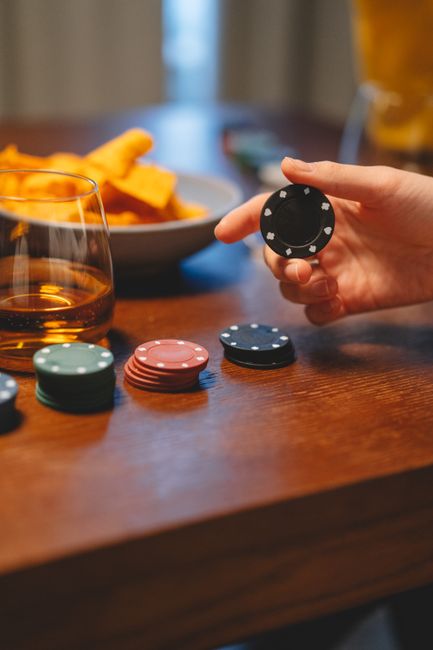
The moment you realize the house edge on a slot machine is not a rumor but a mathematical certainty, something shifts. You stop chasing jackpots like they owe you something and start treating iGaming like what it actually is: an entertainment product with predictable long-term costs, occasional windfalls, and a skill ceiling that varies wildly depending on which game you choose. That single mental adjustment separates players who still enjoy the hobby after five years from those who burned out in six months.
Whether you are spinning reels, grinding micro-stakes poker, or placing accumulators on a Saturday afternoon, the fundamentals do not change. What changes is how well you understand odds, bankroll mechanics, and your own psychology under pressure. Let us break down what actually matters in 2025.
Every casino game carries a built-in advantage for the operator. The size of that advantage determines how long your money lasts, not whether you win on any given night. A single session can go either way, but over a thousand sessions, the house edge grinds you down with brutal consistency. For a closer look, สล็อต has helpful details.
Consider the numbers. Blackjack played with basic strategy sits around a 0.5% house edge. Baccarat banker bets hover near 1.06%. European roulette is 2.7%, while its American cousin doubles the zero pockets and jumps to 5.26%. Online slots typically range between 2% and 8%, though some high-volatility titles push beyond that. Video poker variants like Jacks or Better can drop below 0.5% if you play the optimal strategy perfectly.
That spread matters enormously. A player cycling $10,000 through a 1% edge game loses roughly $100 on average. The same action on a 6% slot loses $600. Knowing this does not make you a winner, but it does help you pick your battles.
None of this means slots are bad. It means you should treat slots as paid entertainment, not as a wealth-building strategy.
Ask ten gamblers about bankroll management and nine will nod along without actually practicing it. The concept is simple: decide in advance how much you are willing to lose, divide it into session units, and stop when those units are gone, no exceptions.
Here is a practical framework I have seen work well:
Sports bettors need a slightly different lens. Flat staking, where you bet the same 1-2% of your bankroll on every pick, keeps variance manageable. Kelly Criterion staking is mathematically optimal but aggressive, and most professionals use fractional Kelly, staking maybe a quarter or a third of the suggested amount.
Every slot has two headline numbers: return to player (RTP) and volatility. Beginners obsess over RTP. Experienced players know volatility determines what the ride actually feels like.
A 96% RTP slot with low volatility doles out frequent, small wins. Your bankroll stretches, sessions feel pleasant, and the entertainment value per dollar is high. A 96% RTP slot with extreme volatility might go 200 spins without a meaningful hit, then dump a 500x multiplier. Same theoretical return, wildly different experience.
Which is better? Depends entirely on what you want. If you have a $50 session budget and want an evening of play, low volatility is your friend. If you are swinging for a big multiplier and accept that most sessions end in a wipeout, high volatility delivers the lottery-style thrill.
Also check whether RTP values are disclosed in the game itself. In some regulated markets such as the UK and Malta, providers publish this information. In gray markets, the same game might ship with a lower RTP version, sometimes 88-92%. The difference over thousands of spins is significant.
Poker is not gambling in the traditional sense. You are not playing against the casino, you are playing against other humans, and the house takes a rake regardless of who wins. That means a skilled player can extract money from weaker opponents over time. It is the closest thing to a sustainable edge in the iGaming world.
But the modern poker ecosystem is unforgiving. Online micro-stakes are crowded with solvers, study groups, and players who have put in tens of thousands of hands. A decade ago, tight-aggressive play crushed $1/$2. Today you need a genuine study routine, hand-history reviews, range charts, and ideally solver work just to hold your own above the lowest stakes.
That said, the game rewards discipline like nothing else in gambling. If you can accept grinding 50,000 hands for a modest win rate, poker offers something slots never will: a path where your decisions actually matter more than luck in the long run.
Sports betting is now the biggest revenue driver in many regulated markets, surpassing traditional casino games in several US states. Most bettors lose, and they lose primarily because they accept whatever price their preferred sportsbook offers.
Line shopping alone can shift your expected value meaningfully. A bet priced at -110 on one sportsbook might be -105 somewhere else, or even +100 during a promotional boost. Over hundreds of bets, the difference compounds. Serious bettors maintain accounts at five or more books and check prices before every wager.
Beyond pricing, there is information edge. Knowing injury reports, travel schedules, weather, lineup rotations, and motivational angles matters more than intuitive hot takes. Sharp bettors treat sports betting like a research project, not a fan hobby.
Tilt, chasing, and the illusion of control ruin more bankrolls than bad odds ever will. Tilt happens when emotion overrides strategy, and it appears in every game: the poker player who three-barrels into a calling station, the slots player doubling stakes to recover losses, the bettor who fires a last-minute parlay at 2 a.m.
Set time limits, not just money limits. Take breaks every hour. Never gamble drunk, angry, or chasing. Treat losses as the cost of entertainment, the same way you would treat a movie ticket. If the entertainment stops feeling like entertainment, step back and take a real break.
iGaming is a category full of genuine fun and genuine risk, and both deserve respect. Understand what you are playing, why you are playing it, and how much it is really worth to you. Do that, and you can enjoy slots, poker, and betting for years without letting any of it control your life. Ignore it, and the math will do what math always does.
Pick games with edges you understand, budgets you can afford, and limits you will not negotiate with yourself at midnight. That is not caution talking. That is just smart gaming.

Gladspinney No rushing, no fuss — just thoughtful notes and practical help, written by people who care.

April 25, 2019 at 10:46 am
Take in the iconic skyline and visit the neighbourhood hangouts that you've only ever seen on TV. Take in the iconic skyline and visit the neighbourhood.


Want to be notified when we launch a new template or an udpate. Just sign up and we'll send you a notification by email.


Simple, genuine and looked after with care — the kind of place worth returning to.

Soldman Kell
April 25, 2019 at 10:46 am
Take in the iconic skyline and visit the neighbourhood hangouts that you've only ever seen on TV. Take in the iconic skyline and visit the neighbourhood.